
Wonthaggi's Hidden Gem & Ecosystems for the Future
A Story of Community, Conservation and Hope
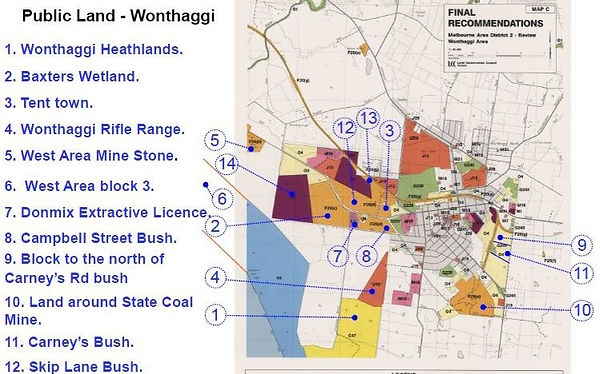
Hidden behind the industrial estate on Carney's Road, just beyond the edge of Wonthaggi, lies a place that few people once noticed. It was an overlooked parcel of Crown land—11 hectares of open ground and remnant bushland. To some, it was simply vacant land. To others, it became a dumping ground for rubbish, abandoned cars, old tyres and illegal motorbike tracks that scarred the landscape.
But to local resident Beth Banks and the South Gippsland Conservation Society (SGCS), this forgotten place represented something entirely different.
Long before the first tree was planted or the first boardwalk post was installed, members of the SGCS had recognised the ecological importance of Carney's Road. Surrounded on three sides by bushland managed by Parks Victoria, the site formed part of a much larger network of remnant vegetation that had survived decades of mining, farming and development. Community members had fought to ensure these parcels of land remained protected for future generations.
They saw possibility. Meetings were held, concepts mulled over, presentations created and presented to local council, Parks Victoria and other potential stakeholders.

Their vision was ambitious—to transform this neglected landscape into a thriving wetland, a biodiversity sanctuary, a place for education, recreation and quiet reflection.
In 2018, that vision took a giant leap forward.
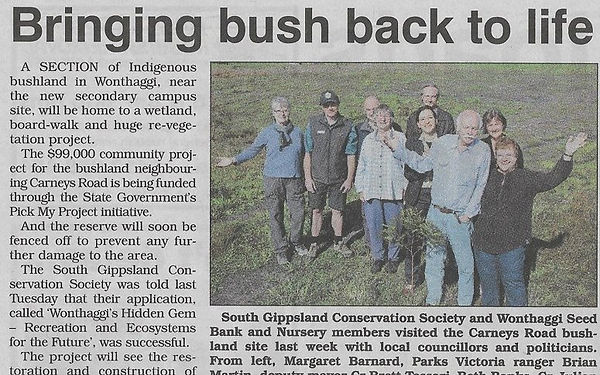
The Victorian Government launched the Pick My Project initiative, allowing communities across the state to vote for projects that would improve their local area. SGCS prepared what would become the largest single funding application in its history. Members worked tirelessly, presenting their proposal to Bass Coast Shire Council, local organisations and community groups. Volunteers rallied support while the Wonthaggi Seed Bank and Nursery stood beside them, believing in the dream.
When public voting closed, the people of Victoria had spoken.
"Wonthaggi's Hidden Gem – Recreation and Ecosystems for the Future" had been selected.
The announcement was met with celebration throughout the community. Local newspapers quickly shared the good news, recognising not only the funding success but also the years of dedication that had led to that moment.
The real work, however, was only just beginning.


Before any construction could start, the team needed to understand the land itself.

Surveyors embarked on what became something of a treasure hunt, searching for a permanent survey marker installed more than fifty years earlier. Armed with handwritten notes describing clues such as "a bent nail in the post," they eventually found the original marker exactly where history said it would be. From this tiny piece of forgotten infrastructure, the team established precise land levels that would shape the future wetland and boardwalk.


The project demanded far more than engineering.

Because part of the site lay within an area of Aboriginal cultural heritage sensitivity, the SGCS worked closely with the Bunurong Aboriginal Corporation Land Council and heritage consultants. Soil cores were carefully sampled. Test pits were excavated by hand. Every handful of earth was respectfully examined to ensure Aboriginal cultural heritage would be protected before any ground disturbance occurred.
No artefacts were uncovered, but the process reflected something fundamental about the project: restoring the land also meant respecting its much older story.
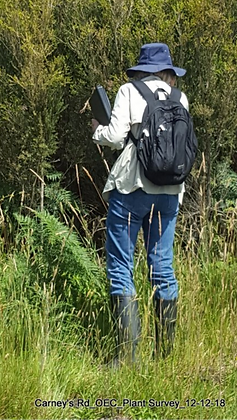
Ecological Vegetation Surveys were undertaken to identify what remnant species were on site and what would need to be propagated and returned.
Meanwhile, volunteers tackled another challenge.
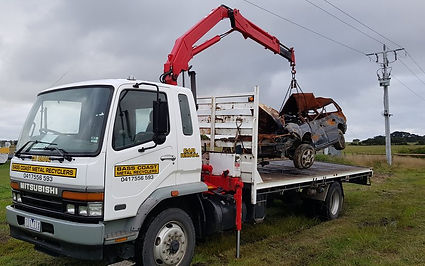
Years of illegal dumping had left the site littered with waste. Twenty discarded tyres, broken fencing, concrete, twisted metal, glass, plastic and abandoned car parts were painstakingly removed.
Parks Victoria, contractors and countless volunteers worked side by side, reclaiming the landscape one trailer load at a time.

Then came the weeds. Blackberry, Sweet Pittosporum, Coastal Wattle and Broom had established themselves across much of the site. Some required contractors; others were tackled by volunteers armed with gloves, tools and determination. Every season brought another round of weed control, gradually giving indigenous vegetation a chance to recover.

At last, the landscape was ready to heal.


Construction of the ephemeral wetland began in early 2020. Like many projects across Victoria, progress was interrupted by COVID-19, supply shortages, contractor challenges and unusually wet weather. Even after construction, repairs were required to correct issues with the outlet structure.
Yet nature was patient.
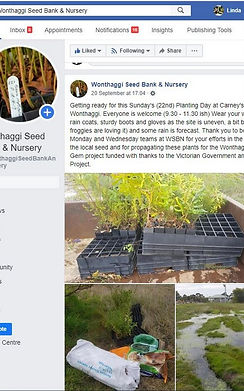
Wonthaggi Seed Bank and Nursery have supported this project annually, providing indigenous species that were once thriving on this site.. Initially remnant species were harvested and WSBN nurtured these until re vegetation opportunities became available.
As the wetland settled, water arrived with the seasons. Native sedges, rushes and aquatic plants slowly emerged. Around one thousand wetland plants were established, while species already hiding within the landscape—including the delicate Fairy's Aprons and the Pithy Sword-sedge—began flourishing around the wetland margins.
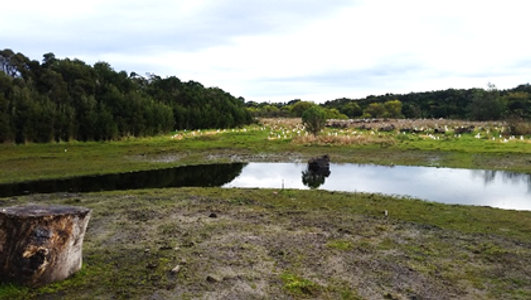
More than three thousand indigenous trees, shrubs and groundcovers followed, representing the site's original ecological communities of Damp Sands Herb-rich Woodland, Damp Melaleuca Scrub and Tall Marsh. National Tree Days yearly have been celebrated at this site with tree planting activities, supported by South Gippsland Conservation Society members, Wonthaggi Seed Bank and Nursery, Rotary Wonthaggi, local community members and recently the Wonthaggi Urban Landcare group.


Not every planting survived. Some flourished while others struggled against weather, weeds and changing conditions. But restoration is never measured in a single season.

It is measured across decades.
The boardwalk became another symbol of persistence.

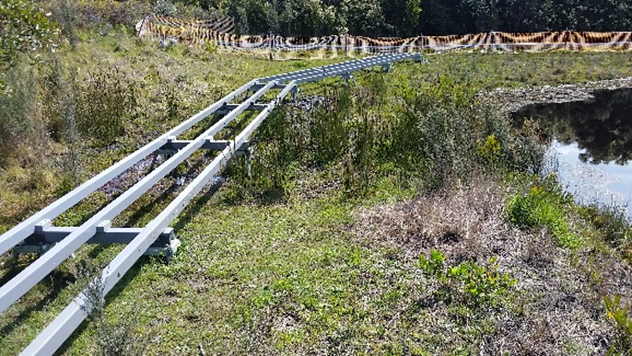


Originally planned under the Pick My Project funding, construction stretched well beyond expectations due to flooding, saturated ground and pandemic delays. Eventually, Stage One reached completion, protecting fragile wetland vegetation while allowing visitors to experience the landscape without damaging it.
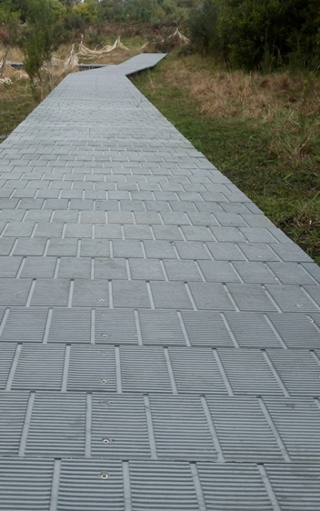
Stage Two, supported through DEECA's Distinctive Areas and Landscapes funding, expanded the vision further with a looped boardwalk connecting directly to Carney's Road. The elevated walkway allows people to explore the wetland while safeguarding the delicate ecosystem beneath their feet.
As the years passed, the site quietly transformed.

The seasonal wetland developed its own rhythm—filling after winter rains before slowly drying during summer. These changing water levels created ideal habitat for an ever-growing diversity of native species.
White-faced Herons hunted freshwater crayfish in the shallow waters.
Swamp Goodenia naturally regenerated.
Hooker's Fescue, an indigenous grass once thought absent from the site, appeared unexpectedly.
Echidnas wandered through the bush.

Wombats returned.

Eastern Grey Kangaroos grazed across the open spaces.
Each new observation confirmed what the volunteers had always believed: if given the opportunity, nature knows how to recover.
Today, Wonthaggi's Hidden Gem is far more than a wetland.
It is an outdoor classroom beside Wonthaggi Secondary College. It forms part of an important biodiversity corridor linking bushland, farmland and the Rail Trail. It contributes to the vision of a future walking trail connecting Wonthaggi and Inverloch. It provides habitat, improves climate resilience and offers the community a peaceful place to experience nature close to town.
Perhaps most importantly, it demonstrates what can happen when government, volunteers, community groups, Traditional Owners and local organisations work together with a shared purpose.
The project was never intended to finish after the first grant. There will always be more weeds to control, more plants to establish, more boardwalks to build and more wildlife to monitor.
Conservation is not a destination.

It's an ongoing commitment.
The story of Wonthaggi's Hidden Gem and Eco Systems for the Future continues to be written every planting day, every working bee and every season the wetland fills with life.
What was once an overlooked piece of land has become exactly what its name promised—a hidden gem.

Not simply for today's community, but for future generations who will walk its boardwalks, discover its wildlife and inherit a landscape restored through the dedication, vision and perseverance of those who believed that even the most forgotten places deserve a second chance.


Dave Sutton and Linda Pettit - Project Co-ordinators